
Combined Heat and Power
Combined Heat and Power
Combined Heat and Power (CHP) is the simultaneous production of electricity and thermal energy for use in heating, cooling, or other processes.
Boost Your Business with CHP
Lower Energy Costs
CHP can drastically reduce your energy bills through efficient energy production and use, saving you thousands of dollars every year.
Increased Reliability
CHP allows you to generate your own power on site, giving you more control over your energy supply and enhancing your grid reliability.
Reduced Environmental Impact
By reducing your reliance on grid-supplied electricity, you can lower your business’s carbon footprint and contribute to a cleaner, more sustainable future.
CHP Technologies
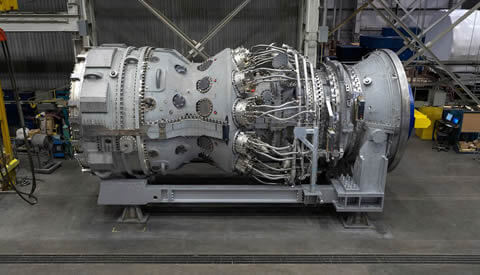
Gas Turbine CHP
Uses hot gases produced by the combustion of natural gas to drive a turbine, generating electricity and heat.
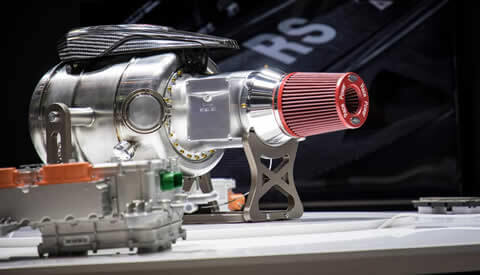
Microturbine CHP
Converts natural gas or other fuels into electricity and heat through a high-speed combustion process, ideal for smaller businesses.
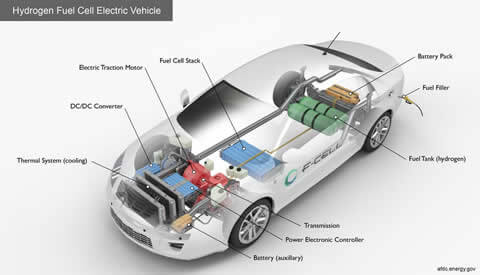
Fuel Cell CHP
Generates electricity and heat through an electrochemical process using hydrogen, natural gas, or biogas as a fuel source.
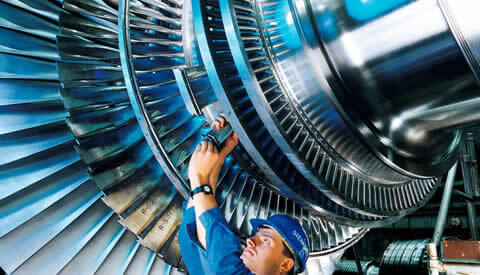
Steam Turbine CHP
Uses high-pressure steam to generate electricity and heat through a turbine, with the added benefit of producing steam for other processes.
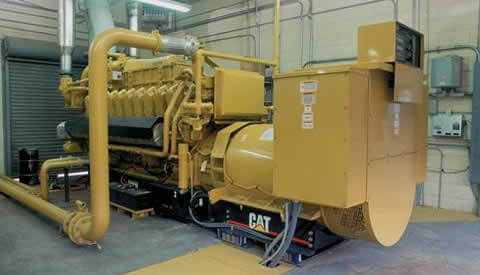
Internal Combustion Engines
Spark ignition engines for power generation use natural gas as the preferred fuel, although they can be set up to run on propane, gasoline, or landfill gas. Current generation natural gas engines offer low first cost, fast start-up, proven reliability when properly maintained, excellent load-following characteristics, and significant heat recovery potential.
Evaluating Economic Viability
To assess the economic feasibility of a possible CHP project and compare it with other energy options, two common methods are payback analysis and life cycle cost (LCC) analysis. Both methods involve calculating the costs, revenues, incentives and savings of the project, as well as the costs of a baseline or alternative scenario, and generating net annual cash flows (pro forma). More advanced analysis can also include state and federal incentives such as tax credits or renewable energy attributes if applicable. The main difference is that LCC considers the whole life of the project while simple payback only considers the cash flows before the payback date and ignores the ones after.
Implementing CHP: Key Considerations
1. Energy Needs
Assess your business’s energy requirements and decide if CHP is a practical solution for your needs.
2. Space and Infrastructure
Consider the physical space and infrastructure required to house CHP equipment and connect it to your existing systems.
3. Financing
Explore financing options for CHP, including grants and incentives, to determine the best way to fund your project.
4. Regulatory Requirements
Ensure compliance with local, state, and federal regulations regarding emissions, permits, and other requirements.
Tri-Generation
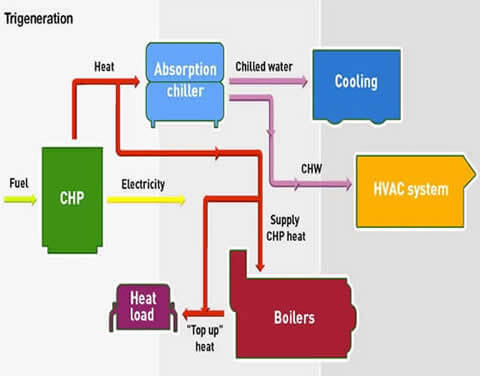
These typically large CHP systems incorporate power generation equipment, combined with heat recovery equipment that produces both cooling and heating for the building. The heating and cooling output may operate concurrently or alternately depending on the need and the system design.
Internal Combustion Engine
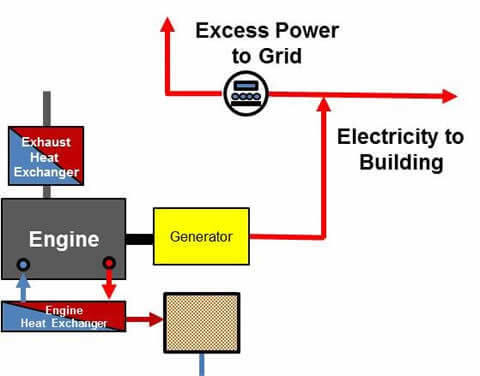
These systems incorporate a reciprocating engine to turn a generator. Recoverable heat can be used from both the jacket water (engine cooling loop) and the exhaust heat. The packages can be skid mounted for ease of installation.
Real-World CHP Success Stories
1. Humboldt Aquatic Center Humboldt, Saskatoon
The 2G CHP unit has been incorporated into the existing facility to supply electricity and heat. The 2G patruus 100 high-efficiency cogeneration module produces continuously 100 kW/h of electricity (830MW per year) and additional thermal energy, which will be delivered to the building in the form of hot water. The module is a complete solution including sophisticated CHP controls, heat recovery technology, advanced gas train, sound enclosure with space ventilation and special silencers.
2. Calgary Airport
An ambitious overhaul of one of Canada’s key air transport hub, features (4) 2G natural gas-fired CHP cogeneration modules, each producing up to 355 kW/h of continuous electricity and up to 475 kW each of thermal energy at more than 88% efficiency.
3. Alberta Pork Producer Hartland Colony CHP installation helps farms offset carbon and energy costs
Hartland’s CHP unit took under two weeks to install and has been up and running at 85 per cent capacity since mid-May 2019. Approximately 90 per cent of all recovered heat can be used during nine months of the year, which translates into a 35 per cent reduction in overall energy costs or more than $230,000 per year. In just under three years, the system is expected to have paid for itself, while the life of the equipment is estimated to be 15 years. Higher energy costs and carbon offset incentives make Alberta a natural fit for CHP.
Cost Savings and Environmental Impact of CHP
Cost Savings
CHP can save businesses thousands of dollars annually on energy costs, which can be redirected towards other investments. Additionally, CHP reduces transmission and distribution losses, leading to further savings.
Environmental Impact
By reducing reliance on the grid and generating power on site, CHP can significantly reduce greenhouse gas emissions and help businesses meet sustainability goals.
Conclusion and Recommendations
CHP is a smart choice for businesses
By producing both heat and power on site, CHP can lead to significant cost savings, increased reliability, and improved environmental sustainability for businesses of all sizes.
Explore CHP options for your business
Before implementing CHP, make sure to assess your energy needs, consider financing options, and ensure regulatory compliance to maximize your chances of success.
Partner with Lexus Engineering
Lexus Engineering is a leader in HVAC and electrical system retrofits, and will design your CHP system for optimal performance. Get everything you need for your engineering project in one place! We’ll work with you from start to finish, from reviewing your concept to creating stamped drawings, to delivering a turn-key system. Our team will make sure you’re up to code and help with the permitting and project coordination. We’ll review and approve shop drawings, and provide as-built drawings when you’re done. No need to stress about theoretical calculations – we’ll help with that too. Let’s work together to bring your ideas to life!
Additional Services
Energy Audits & Modelling
Including Energy Audits as per ASHRAE, as well as targeted audits with a more limited scope.
LEARN MOREMechanical Engineering
Including heating, cooling, ventilation, humidification, plumbing services and more.
LEARN MORE