
Project Details: Swimming Pool Ventilation
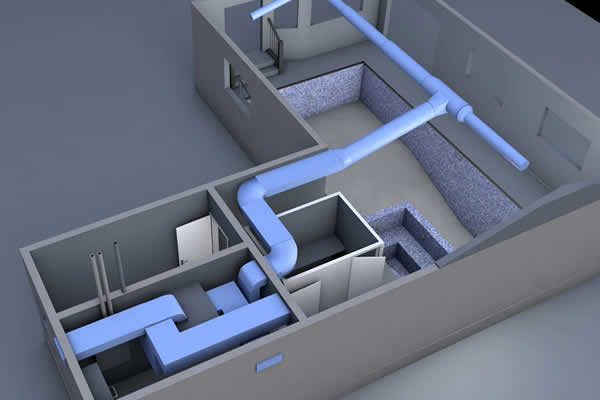
Swimming Pool Ventilation
Service: Mechanical
Location: Edmonton, Alberta
Specialty: Ventilation
Project Summary
Indoor Public and Private swimming pools / natatoriums require accurate engineering control in order to maintain a comfortable environment. This requires an Indepth analysis of the psychrometrics of the space.
In a larger pool design, it makes sense to dehumidify and recirculate the air as opposed to using 100% make up and exhaust. This requires a cost analysis to determine if the operating and capital costs of dehumidifying the space is beneficial compared to heating or cooling 100% of the fresh air into the space.
Commercial and Residential Pools should typically be maintained at 82-83 degrees F. Therapy pools are usually maintained at around 92- 93 degrees F. In dehumidification systems, the air temperature should be maintained at 2 to 3 degrees F greater that the pool water temperature to prevent evaporation into the air. This increases the maintenance heat requirements for the pool water. It is essential to understand the evaporation rate from the pool to evaluate the accurate moisture removal rate for sizing the cooling coil, and condenser.
In 100% fresh air systems, the evaporation rate affects the steady state RH (relative humidity) of the room based on the temperature of the room and the net moisture content added into the room and exhausted from the room. At higher room temperatures, lower stable RH values can be achieved as the saturation vapor pressure is higher at higher temperatures.
Pool rooms should typically be maintained at 50 to 60% RH. Humid rooms increase likelihood of mold and mildew problems. A vapor barrier should be installed in the wall and ceiling assemblies to prevent moisture infiltration into the assemblies.
References: ASHRAE 62.1 – Ventilation for Acceptable Indoor Quality, Performance Coatings for hazardous applications, ASHRAE 90.1
Let's start your project together!
Contact us and let's chat about how we can help.